Post-Election Political Stability: Challenges for Indonesia's New Cabinet
Post-Election Political Stability: Challenges for Indonesia's New Cabinet
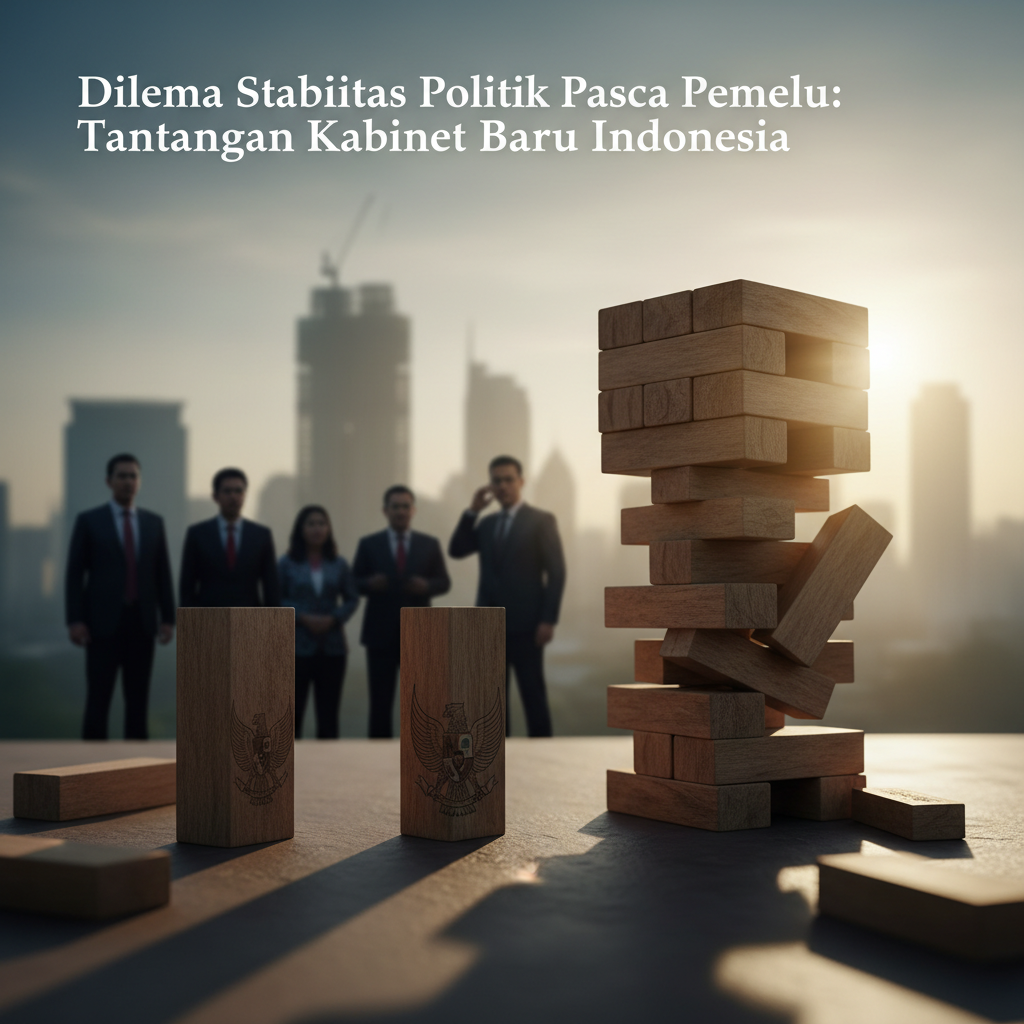
The 2024 Indonesian General Election has ushered in a new chapter in the nation's political landscape. With results largely pointing towards a win for one presidential ticket, attention now shifts to cabinet formation and the potential for political stability that will accompany it. Atom Visi Indonesia observes that while there are hopes for a strong government, the challenges of maintaining post-election political stability are significant, particularly within the context of complex coalition dynamics.
One central issue is how the new cabinet will manage the expectations of its coalition partners. In a multi-party presidential system like Indonesia's, forming a grand coalition is often a necessity to secure a parliamentary majority. However, an overly large coalition can be a double-edged sword, creating potential internal friction and making consensus-building on policy difficult. Past experiences show that 'distributing seats' without considering capability and aligned vision can weaken governmental effectiveness.
Coalition Dynamics and Potential Fragmentation
Post-election, the political map shows the dominance of certain forces, but this does not mean there is no room for opposition or critical voices. How the new cabinet accommodates or interacts with forces outside the core coalition will determine the degree of political stability. If the approach taken is too exclusive, the risk of political fragmentation and polarization may increase, which in turn can hinder the implementation of development programs. Issues such as bureaucratic reform, law enforcement, and ambitious economic agendas require strong cross-party support.
Another challenge is maintaining the independence of state institutions, especially amidst public debate regarding election results and related legal processes. Public trust in democratic institutions is vital for upholding government legitimacy. Excessive political intervention or the perception of injustice can erode this trust, triggering social discontent and protests, potentially disrupting national political stability.
Impact on the National Development Agenda
Political stability is an absolute prerequisite for the sustainability of the national development agenda. Without stability, foreign investment can be deterred, structural reforms will be difficult to implement, and social welfare programs risk stagnation. The new cabinet will face a significant task in continuing strategic projects such as the development of the new capital (IKN), downstream industrialization, and energy transition, all of which require solid and consistent political support.
The incoming government needs to carefully formulate effective political communication strategies to build consensus, both within the coalition and with the wider public. Transparency and accountability in every policy will be key to mitigating potential conflicts and building trust. Building bridges of communication with civil society groups and academics can also enrich policy perspectives and ensure more inclusive decision-making.
Strategic Recommendations
Atom Visi Indonesia recommends that the new cabinet prioritize meritocracy in appointing strategic positions, rather than solely based on party quotas. Strengthening democratic institutions, including the roles of parliament and the judiciary, must be a priority. Furthermore, the government needs to be proactive in managing public narratives and combating disinformation that can be divisive. Inclusive dialogue with all elements of the nation, including opposition groups, is essential to build a solid and sustainable foundation for political stability, crucial for achieving Indonesia's Golden 2045 vision.